
Shockwave Therapy in Hamilton & Ancaster
For tendon pain that has ignored rest, stretching, and time. Shockwave at Interlink is delivered by a registered physiotherapist inside a full physiotherapy session, using Storz Medical equipment, so the tissue is stimulated and strengthened in the same visit. Your first assessment and first treatment are free.
No referral needed · Direct billing · $15 add-on to any session
- 5.0 on Google
- No Referral Needed
- Direct Billing Available
- Registered Physiotherapist
- In-Clinic Shockwave Device
The treatment
What Is Shockwave Therapy?
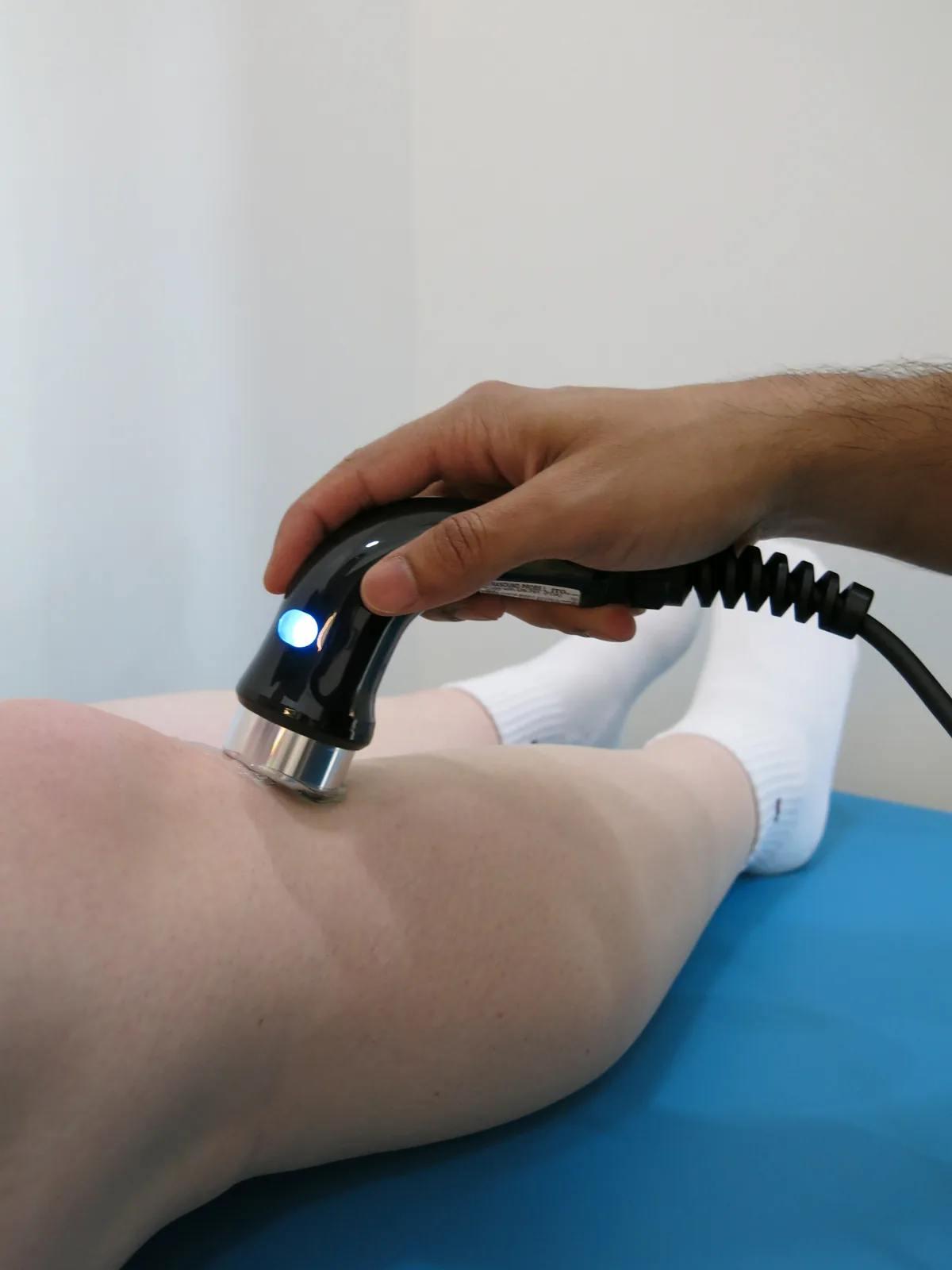
Shockwave therapy, also called radial extracorporeal shockwave therapy or ESWT, sends rapid acoustic pressure waves into an injured tendon or muscle through a small handheld applicator. The pulses reach tissue that has stopped responding to rest and gentle care.
Chronic tendon problems are rarely inflamed. More often the tissue has stalled partway through healing. Shockwave gives it a fresh push. The pulses boost local blood flow, wake up the body's repair response and dial down pain signals from the area. Clinical trials and systematic reviews support its use for plantar fasciitis, tennis elbow and other stubborn tendon conditions.
At Interlink, every shockwave treatment is applied by Dhiman Patel, a registered physiotherapist. The shockwave portion takes about five minutes of your session. The rest of your visit is spent on the hands-on care and exercise that make the results last.
Under the skin
How Shockwave Actually Heals
The pulses do more than massage the tissue. Research points to four things happening in the weeks after treatment:
Cells get a wake-up signal
Tendon cells sense the mechanical pulses and respond by releasing growth factors, the chemical messengers that restart a stalled healing process. Researchers call this mechanotransduction.
Blood supply improves
The pulses stimulate the growth of tiny new blood vessels in tissue that normally has poor circulation. Better blood flow means more oxygen and nutrients reaching the injured area.
Calcium deposits break down
In conditions like calcific shoulder tendinopathy, shockwave helps the body break up and reabsorb the hardened deposits that grind inside the tendon.
Pain signals settle
Shockwave lowers the concentration of substance P, one of the body's main pain messengers, and calms overactive nerve endings in the area. This is why some people feel relief before the tissue has fully healed.
Our equipment
The Device We Use: Storz Medical MASTERPULS Ultra
Shockwave results depend on the machine as much as the technique. We invested in the MASTERPULS ultra line from Storz Medical, a Swiss company that has focused on shockwave technology for decades and supplies clinics and hospitals worldwide.
- Radial pressure waves delivered through the FALCON handpiece, designed for precise, comfortable contact
- Intensity adjustable up to 5 bar, so treatment is strong enough to matter and tuned to what you can comfortably handle
- Pulse frequency from 1 to 21 Hz, matched to the tissue being treated
- Every setting chosen and applied by your physiotherapist, not a technician
Your first assessment and first treatment are free, so you can experience the approach before spending anything.

The numbers
What the Research Shows
average pain score reduction at 12 weeks in a placebo-controlled trial of radial shockwave for plantar fasciitis with 245 patients, compared with 44.7% in the placebo group. The gap widened by 12 months.
of patients in a randomized trial of 90 people with calcific shoulder tendinopathy had their calcium deposits fully cleared after radial shockwave. No untreated patient did.
in a randomized trial of 68 people with Achilles tendinopathy, adding shockwave to a loading program raised the likelihood of recovery at the four month mark compared with exercise alone.
A 2026 meta-analysis covering 530 patients found radial shockwave, the type we use, performs on par with focused devices for pain relief and is just as safe. Every tendon and every person is different, so your results and timeline will be your own. Full citations are listed at the bottom of this page.
Is it for you
What Shockwave Helps With
Shockwave is most useful for tendon and fascia problems that have lasted three months or longer. At our clinic it is commonly part of the plan for:
Not sure your problem fits this list? Book the free assessment. If shockwave is not the right tool, you will leave with a clear plan that is.
Our approach
Shockwave Plus Physiotherapy in One Visit
One thing we are upfront about: shockwave is not a standalone fix. Tendons recover through gradual loading, and research keeps landing on the same point. Shockwave works best when it is paired with a progressive exercise program. Shockwave stimulates the tissue. Exercise teaches it to carry load again. You need both for a result that lasts.
That is why shockwave at Interlink is always part of a physiotherapy session rather than a standalone appointment. In one 30 minute visit you get:
- A check-in on your pain, movement and progress since last visit
- About five minutes of shockwave over the target tissue
- Hands-on treatment for the joints and muscles around the problem
- A loading and range of motion program that progresses each week
- A clear home plan, so you know exactly what to do between visits
One physiotherapist delivers all of it, every visit. Nothing about your plan gets lost in a handoff.
Pricing
What Shockwave Therapy Costs
Clear numbers, no surprises. Shockwave is a small add-on to a standard session, and it is only charged on visits where it is used.
Most tendon plans use shockwave for 3 to 6 visits. If your extended health plan covers physiotherapy, it usually applies to the full visit, and we bill most major insurers directly when your plan allows it.
What to expect
Your Shockwave Session, Step by Step
Assessment first
Before any treatment, Dhiman assesses your movement, strength and history to confirm shockwave fits your problem. Shockwave on the wrong problem wastes your time and money. If a different approach will serve you better, that is what you will get.
The treatment itself
Gel goes on the skin and the applicator delivers roughly 2,000 rapid pulses over the sore tissue. It feels like quick tapping. Tender spots can sting a little, and the intensity is adjusted to stay manageable.
Right after
There is no downtime. You can drive, work and walk as normal. The area may feel warm or mildly sore for up to 48 hours, which is part of the healing response. Ease off hard training during that window.
Between visits
Your loading exercises are where the lasting change happens. Sessions are spaced about a week apart, and your program progresses each visit as the tendon gets stronger.
Safety
Who Should Not Have Shockwave
Shockwave is safe for most adults, and your physiotherapist screens for the exceptions at your assessment. We do not use shockwave:
- During pregnancy
- If you have a bleeding disorder or take blood-thinning medication
- Over an area that had a cortisone injection in the past six weeks
- Over infected or broken skin
- Near a pacemaker or implanted device
- Over the growth plates of teens who are still growing
- Over an area with a known tumour
If shockwave is not a fit, you still have options. Manual therapy, targeted exercise and other tools in the clinic treat the same conditions, and your assessment will point to the right path.
Questions
Shockwave Therapy FAQs
How much does shockwave therapy cost in Hamilton and Ancaster?
A 30 minute physiotherapy session at Interlink is $95. Shockwave is a $15 add-on within that session, so a visit that includes shockwave is $110. Your first assessment and first treatment are free, and we bill most major insurers directly.
Does shockwave therapy hurt?
You will feel rapid taps over the sore spot, and tender tissue can be uncomfortable for a few minutes. Your physiotherapist adjusts the intensity to keep it manageable, and most people tolerate it well. Mild soreness for a day or two afterward is normal.
How many shockwave sessions will I need?
Most tendon problems respond over 3 to 6 sessions, spaced about one week apart. Your physiotherapist reviews your progress at every visit and adjusts the plan with you.
Is shockwave therapy covered by insurance?
At Interlink, shockwave is delivered inside a physiotherapy session by a registered physiotherapist. If your extended health plan covers physiotherapy, that coverage usually applies to the visit. We bill Sun Life, Manulife, Canada Life, Blue Cross, GreenShield and most other major insurers directly when your plan allows it. OHIP does not cover physiotherapy at private clinics.
Does shockwave therapy actually work?
Randomized trials and systematic reviews support shockwave for plantar fasciitis, tennis elbow and other chronic tendon problems. The research also shows it works best when it is paired with a structured exercise program, which is exactly how we use it. It is not an instant fix. The benefit builds over several weeks as the tissue heals.
Is shockwave the same as therapeutic ultrasound?
No. Ultrasound delivers sound waves as a gentle, continuous energy. Shockwave delivers stronger acoustic pulses designed to trigger a healing response in stubborn tissue. We offer both at the clinic and choose based on your assessment.
What shockwave machine do you use?
We use the MASTERPULS ultra line from Storz Medical, a Swiss company that specializes in shockwave technology. It delivers radial pressure waves through a handheld applicator, with intensity and pulse frequency adjusted for your comfort at every visit.
Do I need a doctor's referral for shockwave therapy?
No referral is needed to book. Some insurance plans ask for a doctor's note before they reimburse physiotherapy, so it is worth checking your plan details.
How soon will I feel a difference?
Some people notice a change after one or two sessions. For most, meaningful improvement shows up over 4 to 6 weeks as the tendon adapts to treatment and loading. Timelines vary from person to person.
Where can I get shockwave therapy near Hamilton?
Our clinic is at 1280 Mohawk Rd #103 in Ancaster, with free parking at the door. For most of Hamilton, including the West Mountain and Westdale, it is a 10 to 20 minute drive.
Can I exercise after a shockwave session?
Light activity is fine the same day. We suggest easing off hard efforts on the treated area for about 48 hours. Your physiotherapist builds this into your exercise plan so you always know what to do next.
Evidence
Research Behind Shockwave
- Gerdesmeyer L, et al. Radial extracorporeal shock wave therapy is safe and effective in the treatment of chronic recalcitrant plantar fasciitis. American Journal of Sports Medicine. 2008.
- Rompe JD, et al. Eccentric loading versus eccentric loading plus shock-wave treatment for midportion Achilles tendinopathy. American Journal of Sports Medicine. 2009.
- Speed C. A systematic review of shockwave therapies in soft tissue conditions: focusing on the evidence. British Journal of Sports Medicine. 2014.
- Korakakis V, et al. The effectiveness of extracorporeal shockwave therapy in common lower limb conditions: a systematic review. British Journal of Sports Medicine. 2018.
- Wang CJ. Extracorporeal shockwave therapy in musculoskeletal disorders. Journal of Orthopaedic Surgery and Research. 2012.
- Cacchio A, et al. Effectiveness of radial shock-wave therapy for calcific tendinitis of the shoulder: single-blind, randomized clinical study. Physical Therapy. 2006.
- Efficacy of radial and focused shockwave therapy for tendinopathy: a systematic review and meta-analysis. Scientific Reports. 2026.
Next step
Find Out If Shockwave Fits Your Recovery
Book a free assessment with a registered physiotherapist. You will get a clear diagnosis, an honest answer on whether shockwave will help, and your first treatment at no charge.